A Gates Agricultural Innovations explainer shared in the industry feed introduces the source–sink relationship behind cassava production: how leaves supply assimilates and storage roots use them. The CASS research programme is investigating that balance, offering a useful comparison for potato specialists while keeping the differences between the two crops explicit.
What source and sink describe
De acordo com o relatório Gates Ag One video resources, the explanation connects photosynthesis with the movement and use of the resulting carbon in a crop. The CASS programme’s source–sink overview describes work on the balance between cassava leaves and storage roots.
The programme’s ambition to increase productivity is a research objective. It should not be reported as an already achieved, independently demonstrated doubling of yield across farmers’ fields. The shared explainer introduces a biological problem; it is not a new commercial variety release or a completed multi-country farm-performance trial.
Dias úteis. Cancele a inscrição com um clique.
Cassava stores harvested material in storage roots, whereas the harvested potato is a stem tuber. That distinction matters when discussing transfer between crops. A useful scientific question can be shared without assuming that a gene, treatment or measured response will behave identically in both production systems.
Why potato specialists may follow the work
For a potato breeder or crop researcher, the connection is the need to consider both the production of assimilates and their use in the harvested organ. Looking at one part of a plant in isolation can leave important questions unanswered about the performance of the complete crop.
The practical interest is therefore in the research approach and the evidence it generates. Which biological process is being changed? What measurement shows that the change reaches the harvested product? Under which conditions was it tested? These are questions for evaluating a future result, rather than claims that this cassava work has already improved potato output.
CASS partners describe tools for studying plant performance and the interaction between different parts of the crop. Forschungszentrum Jülich’s project information provides institutional context for that ongoing research. Such tools can help investigate mechanisms, while field relevance still needs to be established for the intended crop and environment.
Keep research milestones separate
A clear account of future findings should distinguish a proposed mechanism, a controlled experiment, field testing and performance in a farmer’s production system. These stages answer different questions. Evidence at one stage can justify the next experiment without establishing that a finished technology is ready for routine use.
For industry partners, the useful follow-up is to ask how a result will be tested, what will be compared and which quality measurements matter alongside the quantity harvested. A breeding objective must eventually connect with the requirements of growers and buyers, not simply with a promising observation in one experiment.
The current material is best read as an explanation of an active research direction. Potato-sector readers can use it to frame better questions about crop productivity and starch accumulation. Any claim of a direct benefit for potato farming should await potato-specific evidence, with the trial conditions and limitations stated clearly.
O que isso significa para as fazendas e o mercado
- CASS studies the balance between assimilate supply and cassava storage-root demand.
- A programme’s productivity ambition is an objective, not a demonstrated farm-level result.
- Use the research to frame questions for potato breeding; require potato-specific trials before claiming a transferable benefit.
Fontes
- Gates Agricultural Innovations — video resources
- CASS — source–sink balance
- Forschungszentrum Jülich — CASS project
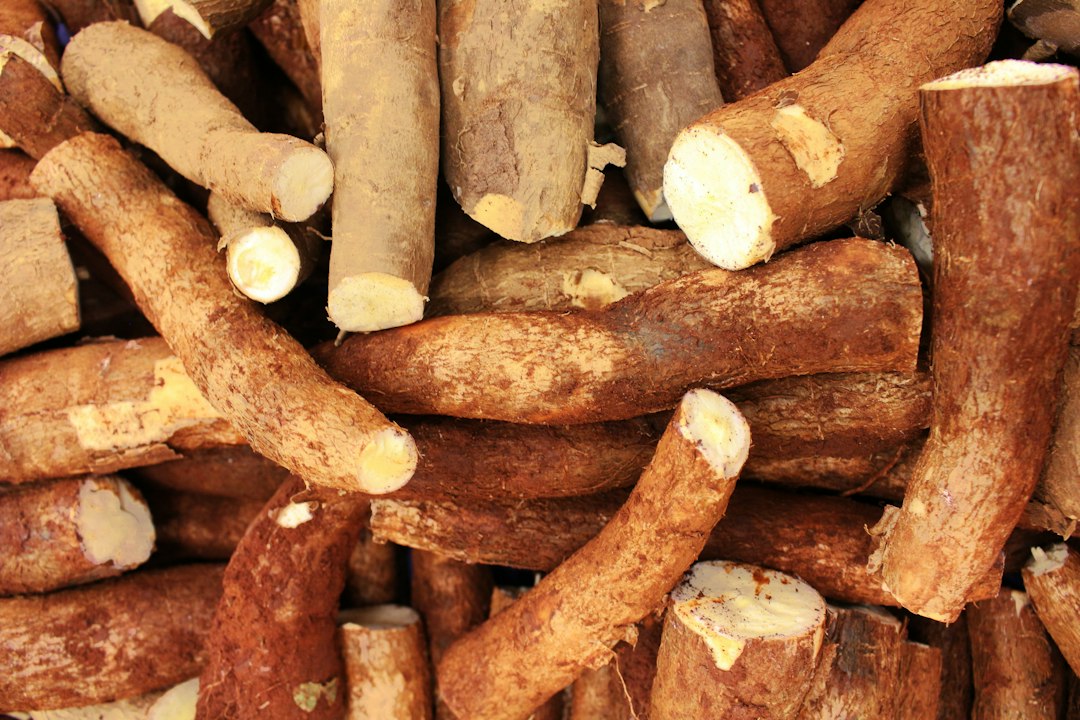
Cassava storage roots; illustrative stock photograph. Photo: Daniel Daniel / Unsplash.